Author: TWWorker

theWord Philip Schaff Works

Philip Schaff (January 1, 1819 – October 20, 1893) was a Swiss-born, German-educated Protestant theologian and ecclesiastical historian,[1] who spent most of his adult life living and teaching in the United States.


Writings

Schaff served as president of the committee that translated the American Standard Version of the Bible, though he died before it was published in 1901.

Schaff’s History of the Christian Church resembled Neander’s work, though less biographical, and was pictorial rather than philosophical. He also wrote biographies, catechisms and hymnals for children, manuals of religious verse, lectures and essays on Dante, etc. He translated Johann Jakob Herzog‘s Real-Encyklopädie für protestantische Theologie und Kirche (Encyclopedia in Real Terms of Protestant Theology and Church) into English.

Working with the Evangelical Alliance and the Chicago (1893) World’s Parliament of Religions, and in Germany, through the monthly Kirchenfreund, Schaff strove earnestly to promote Christian unity and union. It was his hope that the Pope (then Leo XIII) would abandon the doctrine of infallibility and undertake the reunion of Christianity. He recognized that he was a “mediator between German and Anglo-American theology and Christianity.”

Schaff was commissioned to supervise the first series of the Nicene and Post-Nicene Fathers.[7] He was later joined by Henry Wace.[8]

–Wikipedia

Ante-Nicene-Fathers-Volume-1-9.twzip (4253 downloads ) .

Nicene-Fathers-Vol-1-14.gbk_.twzip (4302 downloads ) .

Post-Nicene-Fathers-Vol-1-14.gbk_.twzip (4164 downloads ) .

. Schaff-Philip-Creeds-of-Christendom-Volume-1-3.gbk_.zip (1976 downloads ) .

Philip-Schaff-A-Popular-Commentary-NT.cmt_.twm (451 downloads ) .

schaff-history-of-the-christian-churchchhist.gbk_.twm (266 downloads ) .


Thomas Brooks-Works

The Complete Works
of
Thomas Brooks
Edited, with Memoir,
by the rev. alexander balloch grosart
liverpool

VOL. I.
(552 Pages)
containing:
Precious Remedies Against Satan’s Devices
Apples of Gold for Young Men and Women
The Mute Christian Under the Smarting Rod
A String of Pearls

Vol. II
(552 Pages)
containing:
An Ark for all God’s Noahs
The Privy-key of Heaven
Heaven on earth; or, Well-grounded Assurance

VOL. III.
(518 Pages)
containing:
The Unsearchable Riches of Christ
A Cabinet of Jewels

VOL. IV.
(514 Pages)
containing:
The Crown and Glory of Christianity

Vol. V
(544 Pages)
containing:
The Golden Key to Open Hidden Treasures;
Paradise Opened; and
A Word in Season

VOL. VI.
(472 Pages)
containing:
London’s Lamentations on the Late Fiery Dispensation
The Glorious Day of the Saints’ Appearance
God’s Delight in the Progress of the Upright
Hypocrites Detected
A Believer’s Last Day is His Best Day
A Heavenly Cordial
The Legacy of a Dying Mother and Mrs Bell’s Experiences
Indices, etc.


The-Works-of-Thomas-Brooks.gbk_.twm (379 downloads )

Well-Known Puritan Classics

Well-Known Puritan ClassicsWell-Known Puritan Classics
Author
Famous Works

John Owen
The Mortification of Sin, Communion with God, The Glory of Christ

Richard Baxter

The Reformed Pastor, The Saints’ Everlasting Rest

John Bunyan

The Pilgrim’s Progress, Grace Abounding to the Chief of Sinners

Thomas Watson
A Body of Divinity, The Godly Man’s Picture, The Doctrine of Repentance

Thomas Brooks
Precious Remedies Against Satan’s Devices, Heaven on Earth

John Flavel
Keeping the Heart, The Mystery of Providence

Stephen Charnock
The Existence and Attributes of God

William Gurnall
The Christian in Complete Armour

Jeremiah Burroughs
The Rare Jewel of Christian Contentment

Thomas Goodwin
The Heart of Christ in Heaven Toward Sinners on Earth

Richard Sibbes
The Bruised Reed

Thomas Manton
Exposition of James, Exposition of Psalm 119

Samuel Rutherford
Letters,

Jonathan Edwards
Religious Affections, The Freedom of the Will, The End for Which God Created the World

well-knwon-puritan-classics.twzip-1.zip (623 downloads )

theWord Books by John Gill

John Gill – (1697 – 1771), English Baptist, Biblical scholar, staunch Calvinist
Posted Image
Source: Wikipedia
John Gill was born November 23, 1697 in Kettering, Northamptonshire. In his youth, he attended Kettering Grammar School, mastering the Latin classics and learning Greek by age eleven. The young scholar continued self-study in everything from logic to Hebrew. His love for Hebrew would follow Gill throughout his life.

At the age of about twelve, Gill heard a sermon from his pastor, William Wallis, on the text, “And the Lord called unto Adam, and said unto him, where art thou?” (Genesis 3:9). The message stayed with Gill and eventually led to his conversion. It was not until seven years later that young John made a public profession, when he was almost nineteen years of age.

His first pastoral work was as an intern assisting John Davis at Higham Ferrers in 1718 at age twenty-one. He was subsequently called to pastor the Strict Baptist church at Goat Yard Chapel, Horsleydown, Southwark in 1719. In 1757, his congregation needed larger premises and moved to a Carter Lane, St. Olave’s Street, Southwark. His pastorate lasted 51 years. This Baptist Church would later become the Metropolitan Tabernacle pastored by Charles Spurgeon. During Gill’s ministry the church strongly supported the preaching of George Whitefield at nearby Kennington Common.

In 1748, Gill was awarded the honorary degree of Doctor of Divinity by the University of Aberdeen. He was a profound scholar and a prolific author. His most important works are:

  • The Doctrine of the Trinity Stated and Vindicated ( London, 1731)
  • The Cause of God and Truth (4 parts, 1735–8), a retort to Daniel Whitby’s Five Points
  • An Exposition of the New Testament (3 vols., 1746–8), which with his Exposition of the Old Testament (6 vols., 1748–63) forms his magnum opus
  • A Dissertation on the Antiquity of the Hebrew Languages (1767)
  • A Body of Doctrinal Divinity (1767)
  • A Body of Practical Divinity (1770).

bio from www.ccel.org

Works include in this module include:

The Doctrine of the Trinity Stated and Vindicated ( London, 1731)
The Cause of God and Truth (4 parts, 1735–8), a retort to Daniel Whitby’s Five Points
A Body of Doctrinal Divinity (1767)
A Body of Practical Divinity (1770).
Baptism, A Profession of the Faith of the Gospel (wlue777).top.twm
God and God’s Sovereignty (wlue777).top.twm
God’s Everlasting Covenant.top.twm
God’s Law (wlue777).top.twm
God’s Love (wlue777).top.twm
God’s Word-The Scriptures.top.twm
Man’s Fall and Depravity (wlue777).top.twm
Messiah.top.twm
Prayer (wlue777).top.twm
Summary of the Life, Writings, &c. of Dr. Gill (wlue777).top.twm
The Christian’s Death, Resurrection and Final State in Heaven (wlue777).top.twm
The Divine Right of Infant-Baptism, Examined and Disproved. (wlue777).top.twm
The Gospel Minister (wlue777).top.twm
The Lord Jesus Christ.top.twm
The New Testamant Church and Public Worship (wlue777).top.twm

Works of John Gill

 

Works of John Newton

Works of John Newton

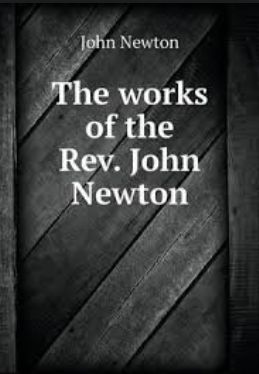
Newton, John – Works of John Newton (6 Volumes)

The works of John Newton are 6 volumes of the writings of John Newton. The content of these 6 volumes are a combination of a lot of his correspondence (letters) and his sermons, including some sections that are like a dictionary of concepts and terms, and also parts that look like a commentary.

Continue reading